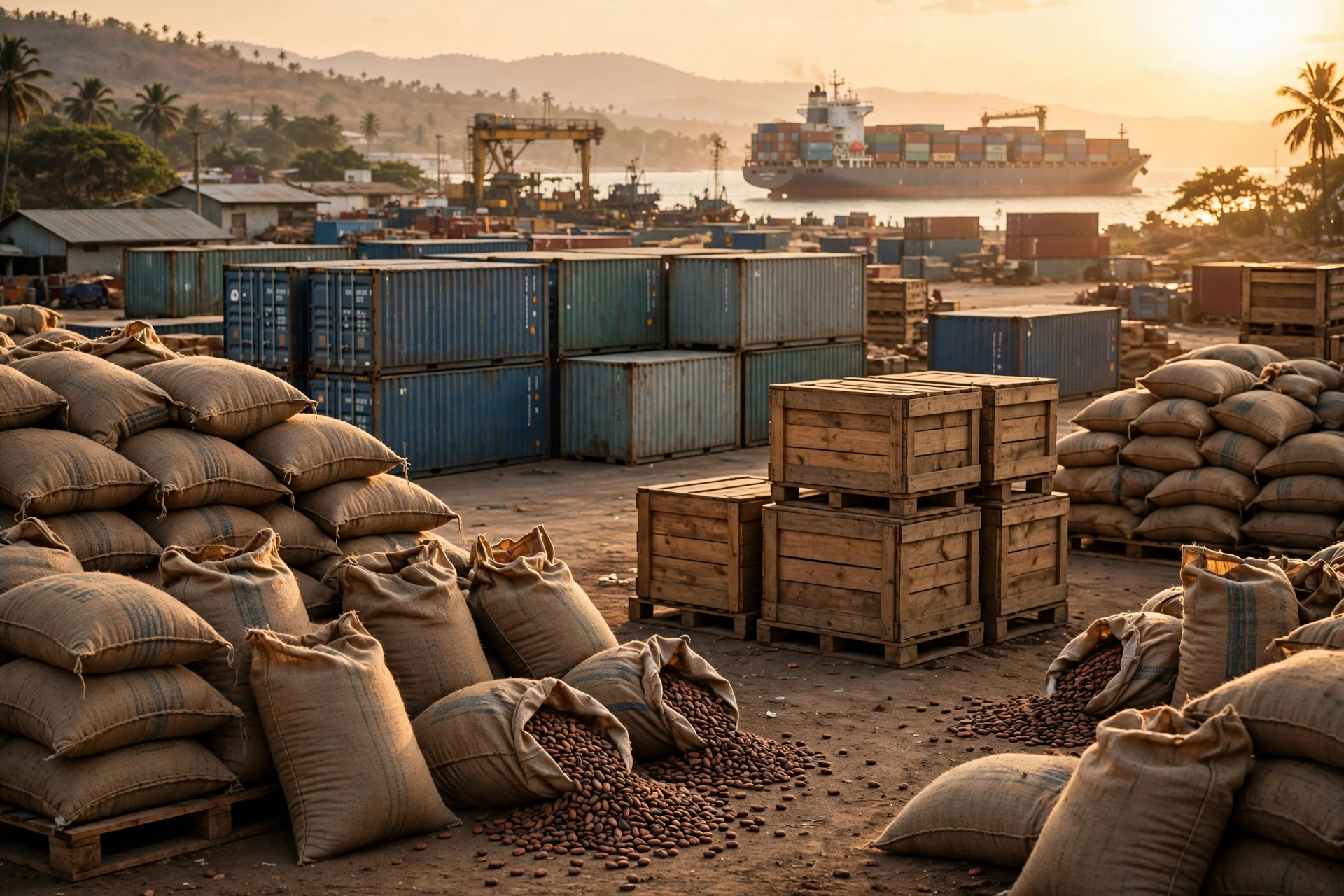
What actually goes into a DDS, who has to file one, and where exporters get tripped up before a shipment ever reaches an EU port.
Understanding EUDR Due Diligence Statements for Cameroon Exporters
Under Regulation (EU) 2025/2650, large and medium-sized operators placing in-scope commodities (cocoa, coffee, timber, rubber, palm oil, soy, cattle) on the EU market must submit a Due Diligence Statement (DDS) through the EU’s information system before those goods can be placed on the market or exported. Micro and small operators get until 30 June 2027, but they still need to prepare for it, most are selling into supply chains where a large downstream buyer is asking for the data now, well ahead of their own legal deadline. Mastering EUDR due diligence statements is therefore non-negotiable for continued EU market access.
Who Actually Files EUDR Due Diligence Statements?
The obligation sits with the EU-based operator placing the goods on the market, typically your buyer or their importer of record, not the Cameroonian exporter. But the DDS can only be as good as the information the exporter supplies upstream, and buyers are increasingly refusing to contract with suppliers who can’t provide it in the format their compliance system expects. In practice, the exporter does the data collection; the buyer files the EUDR due diligence statements.
What EUDR Due Diligence Statements Actually Contain
Four categories of information, all of which need to trace back to source, define compliant EUDR due diligence statements:
- Product description commodity, HS code, quantity, and (for mixed-origin shipments) the breakdown by plot of origin.
- Country of production.
- Geolocation coordinates of every plot where the commodity was produced, a single point for plots under 4 hectares, a polygon for larger ones.
- A risk assessment and, where relevant, risk mitigation measures, evidence that the product is deforestation-free (post-31 December 2020 cut-off) and produced in compliance with the laws of the country of production.
Where Exporters Get Tripped Up on EUDR Due Diligence Statements
- Aggregated or estimated coordinates. A single GPS point for a cooperative’s collection centre, not the individual farm plots, fails verification. Every plot needs its own coordinate for valid EUDR due diligence statements.
- Missing chain-of-custody linkage. If cocoa from ten different plots is bulked at a buying station, the DDS needs a system that keeps the plot-level data attached to the batch, not lost at the point of mixing.
- No plan for the low-risk/standard-risk distinction. Cameroon currently sits in the EU’s standard-risk category, meaning buyers face a 3% compliance-check rate rather than the 1% reserved for low-risk countries.
- Treating this as a one-off exercise. The DDS is submitted per shipment. A traceability system that can only produce one clean report, not a repeatable one, will fail on the second shipment.
BALIA Consulting Checklist: What to Have Ready Before Your Buyer Asks
A digitised plot register with GPS coordinates for every registered farmer, a documented chain-of-custody process from farm to first buying point, and a named person in your organisation who owns this file. Buyers are consolidating their supplier base around exporters who can produce EUDR due diligence statements without a scramble, we cover that shift in our briefing on the EU cocoa buying landscape. Proven exporters also reference the EU Deforestation Regulation Portal for official DDS guidance.
- Digitised plot register with GPS per farmer
- Chain-of-custody from farm to buying station
- Named compliance owner in your organisation
- Repeatable traceability system, not one-off report
Next Steps for Exporters
Continue with Geolocation Data for EUDR: What Smallholder Cooperatives Need to Collect for field-level collection standards, and Certificate of Origin Under AfCFTA to secure preferential access alongside EU compliance. See also the EU Information System for DDS filing.
Frequently Asked Questions on EUDR Due Diligence Statements
Do Cameroonian exporters file the DDS directly?
No, the EU operator files. But without your upstream data, their EUDR due diligence statements cannot be submitted, and they will source elsewhere.
When is a polygon required versus a single point?
Polygons for plots ≥4 hectares; a single latitude/longitude point suffices for smaller smallholder plots under EUDR. This directly impacts your EUDR due diligence statements accuracy.
Need help making your EUDR due diligence statements buyer-ready? Talk to BALIA Consulting: we build the plot register and chain-of-custody your buyer’s system will query.